
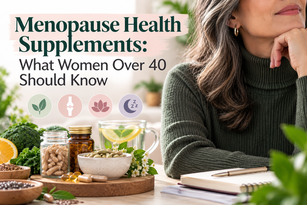
Menopause can bring changes that many women are not fully prepared for. One month, your periods may be predictable; the next, your sleep, energy, mood, and body temperature may seem difficult to manage. You might feel tired even after a full night’s sleep, become irritated more easily, or notice that your body responds differently to exercise and food.
If you are experiencing these changes, you are not alone. Menopause is a natural stage of life, but the symptoms can affect everyday comfort and confidence. Understanding your body, improving your daily habits, and learning about menopause healthsupplements can help you make more informed decisions about your well-being.
However, supplements are not a magic solution. Some may help fill nutritional gaps, while evidence for many products marketed specifically for menopause remains limited. The right approach starts with understanding your symptoms and identifying what your body actually needs.
What Is Menopause, and Why Does It Happen?
Menopause marks the end of menstrual periods and the natural reproductive stage of life. It is generally diagnosed after a woman has gone 12 consecutive months without a menstrual period, provided another medical cause does not explain the change.
The years leading up to menopause are called perimenopause. During this transition, estrogen and other hormone levels fluctuate, and menstrual cycles may become irregular.
Natural menopause most often occurs between ages 45 and 55, although it can happen earlier or later. Some women experience noticeable symptoms for several years, while others have relatively mild changes.
For women over 40, understanding this transition is important because changes in sleep, mood, menstrual patterns, and temperature regulation can begin before periods stop completely.
Perimenopause is the transition period. Menopause is the point reached after 12 consecutive months without a period. Postmenopause refers to the years after that point.
What Are the Early Signs of Menopause?
Menopause does not look the same for every woman. You may experience several symptoms at once, or you may notice only one or two changes initially.
Here are some early signs worth understanding.
- Irregular Periods: Your menstrual cycle may become shorter, longer, heavier, or lighter. You may also skip periods and then have one again.
Irregular periods are common during perimenopause, but unusually heavy bleeding, bleeding between periods, or bleeding after menopause should be evaluated by a healthcare professional. - Hot Flashes and Night Sweats: A hot flash can feel like a sudden wave of heat spreading across your face, neck, and chest. Some women also experience sweating, flushing, or a rapid heartbeat.
Night sweats can interrupt sleep, leaving you tired and less focused the following day. - Sleep Problems: You may find it harder to fall asleep, wake up repeatedly during the night, or feel unrefreshed in the morning. Hot flashes, night sweats, stress, and other health conditions can all contribute.
Persistent sleep problems deserve attention rather than being dismissed as an unavoidable part of getting older. - Mood Changes and Irritability: You might feel more anxious, impatient, emotional, or overwhelmed than usual. Hormonal changes and disrupted sleep may contribute, but work pressure, family responsibilities, and other life changes can also affect mood.
These feelings are real. You do not need to blame yourself or assume that you simply have to tolerate them. - Brain Fog and Difficulty Concentrating: Some women report forgetfulness, difficulty finding words, or trouble concentrating during the menopause transition.
Poor sleep, stress, and mood changes may play a role. Persistent or severe memory problems should not automatically be attributed to menopause. - Changes in Energy and Body Composition: You may notice changes in your weight distribution, muscle strength, or exercise recovery. Age, activity levels, sleep, diet, and hormonal changes can all contribute.
Menopause does not mean weight gain is inevitable, nor does it mean you have to stop being active. Strength training, balanced meals, adequate sleep, and realistic fitness goals remain valuable. - Vaginal Dryness and Changes in Sexual Comfort: Lower estrogen levels can cause vaginal dryness, irritation, and discomfort during sex. Some women also notice urinary symptoms.
These symptoms have effective treatment options, including local vaginal treatments. Oral supplements are not a reliable substitute for appropriate treatment.
Quick reminder: Early menopause symptoms can overlap with thyroid problems, anemia, medication effects, stress, and other conditions. If symptoms are new, severe, or interfering with everyday life, speak with a healthcare professional.
How Can Menopause Affect Women Over 40?
For many women, the challenge is not just one symptom. It is how several changes combine.
Imagine waking up after a night interrupted by sweating, heading to work while feeling exhausted, struggling to concentrate in the afternoon, and then feeling frustrated because your usual exercise routine seems harder than before.
This can affect confidence, relationships, work performance, and motivation.
Some women feel less comfortable in their bodies. Others worry about bone health, sexual comfort, changing energy levels, or whether their symptoms are normal. When reliable information is difficult to find, it can be tempting to buy a supplement promising quick relief.
This is where knowledge becomes important.

Instead of assuming every symptom is caused by menopause, take time to understand what is happening. Keep track of your menstrual changes, sleep, hot flashes, mood, and any medicines or supplements you use. These details can help you and your healthcare professional identify possible causes and discuss suitable options.
The aim is not to fight the natural aging process. It is to protect your health, manage troublesome symptoms, and continue living an active, fulfilling life.
When Do You Need Menopause Health Supplements?
Not every woman going through menopause needs a supplement. A balanced diet may provide most of the nutrients your body needs, and a supplement will not automatically correct every symptom associated with hormonal changes.
Menopause health supplements may be worth discussing with a healthcare professional in situations such as these.
When Your Diet Does Not Provide Enough Nutrients
If your diet is restricted, you avoid certain food groups, or you struggle to meet your nutritional needs, a supplement may help fill a specific gap.
For example, vitamin D may be useful if you have low levels or are at risk of deficiency. Calcium may be appropriate if your dietary intake is insufficient.
The goal is to meet your nutritional needs, not to take as many vitamins as possible.
When You Have Specific Bone-Health Needs
Bone loss becomes an important consideration as women age, and the decline in estrogen around menopause can accelerate bone loss.
Calcium and vitamin D are important for bone health. However, supplements should be chosen according to dietary intake, individual risk factors, and professional advice. They are not a guarantee against osteoporosis or fractures.
When You Want to Address a Specific Symptom
Some products are marketed for hot flashes, sleep problems, mood changes, and other menopause symptoms. Research into many herbal and botanical products has produced mixed or limited results.
Before trying a product, identify the symptom you want to address and ask whether there is credible evidence that the ingredient helps with that particular problem.
For women researching menopause healthsupplements, this distinction matters: a product that supports normal nutrient intake is not necessarily a product that relieves hot flashes or improves sleep.
When a Healthcare Professional Identifies a Deficiency
Blood tests or a review of your diet and health history may help identify a nutritional deficiency or a reason to consider supplementation.
Do not assume that fatigue automatically means you need iron, that poor sleep means you need melatonin, or that every woman over 40 needs the same multivitamin.
Supplements are most useful when they address a real need. They are not automatically necessary because you have reached a particular age.
Which Menopause Health Supplements Are Worth Understanding?
There is no single supplement that works for every woman. The following nutrients and ingredients are commonly discussed in menopause care, but their purposes and levels of evidence differ.
- Vitamin D: Vitamin D helps the body absorb calcium and supports normal bone and muscle function.
It may be particularly relevant if your vitamin D level is low or your risk of deficiency is elevated. However, it has not been clearly shown to relieve common menopause symptoms such as hot flashes.
Ask your healthcare professional whether supplementation is appropriate for your circumstances. - Calcium: Calcium is essential for maintaining bones and teeth. Women approaching and moving through menopause should pay attention to their calcium intake because bone health becomes increasingly important with age.
Food sources include dairy products, calcium-fortified foods, and certain fish eaten with their edible bones.
If you cannot get enough calcium from food, a supplement may help fill the gap. Taking excessive amounts can cause constipation and may increase the risk of kidney stones in some people. - Magnesium: Magnesium supports muscle and nerve function and many other processes in the body. It is found in foods such as nuts, seeds, legumes, and whole grains.
Although magnesium supplements are frequently promoted for sleep and relaxation, evidence that they specifically improve menopause-related sleep problems is limited. Supplementation may be appropriate for certain people, but it should not be treated as a universal menopause remedy. - Omega-3 Fatty Acids: Omega-3 fatty acids are found in oily fish, as well as some plant foods and oils. They support normal body functions, including cardiovascular health.
Research has not consistently shown that omega-3 supplements relieve hot flashes or other menopause symptoms. They may still be relevant to overall nutrition when dietary intake is low or there is another appropriate reason to use them. - Soy Isoflavones and Other Phytoestrogens: Phytoestrogens are plant compounds that can interact with estrogen-related pathways in the body. Soy foods contain isoflavones, which have been studied for their possible effects on hot flashes and other menopause symptoms.
Results are inconsistent. Some women may report benefits, but these products are not proven substitutes for estrogen therapy.
If you have a history of hormone-sensitive cancer or another condition that may affect their safety, seek medical advice before using concentrated phytoestrogen supplements. - Black Cohosh: Black cohosh is an herbal ingredient commonly marketed for hot flashes and other menopause symptoms.
Research has produced mixed results, and long-term safety is not fully established. Rare cases of liver injury have been reported in association with commercial black cohosh products.
It should not be assumed to be safe simply because it is plant-based. Discuss it with a healthcare professional before use, particularly if you have liver problems or take medicines. - Other Herbal Ingredients: You may encounter products containing red clover, evening primrose oil, ginseng, maca, or other botanical ingredients.
The amount and quality of evidence vary considerably. Some ingredients have not been studied well enough to establish whether they work, while others may interact with medicines or cause side effects.
Do not rely on testimonials, dramatic marketing claims, or the word “natural” as proof of safety or effectiveness.
What Should You Look for in Menopause Health Supplements?
Choosing a supplement requires more than comparing bottle designs or reading customer reviews. A careful approach can help you avoid unnecessary spending and reduce potential risks.
- Check the Exact Ingredients: Read the full ingredient list rather than relying on the product name or front-label claims. Look for the amount of each active ingredient, the serving size, and whether the product contains several overlapping vitamins or minerals. A long ingredient list does not necessarily mean a supplement is more effective.
- Look for a Clear Reason to Use It: Ask yourself what you want the product to do. Are you trying to correct a confirmed deficiency, meet a nutritional need, or manage a specific symptom? Different goals require different approaches. A general multivitamin may help cover some nutritional gaps, but it is not a proven treatment for hot flashes, night sweats, or every other menopause symptom.
- Check the Dose: More is not always better. Some vitamins and minerals can cause harm when taken in excessive amounts, particularly when several products contain the same ingredients. Compare the supplement’s dose with established nutritional guidance and your individual needs. Avoid combining multiple products without checking their total amounts.
- Consider Independent Quality Testing: Where available, look for independent testing or certification from a reputable organization, such as USP or NSF. These programs can help assess aspects of product quality, identity, or purity. They do not prove that a supplement is effective for menopause symptoms.
- Check for Medication Interactions: Some herbal products can interact with prescription medicines, over-the-counter medicines, or other supplements. For example, St. John’s wort can interact with many medicines, while high-dose vitamin E may increase bleeding risk in some circumstances. Ask a pharmacist or healthcare professional to review the complete ingredient list, especially if you take regular medication or have an ongoing medical condition.
- Be Cautious of Unrealistic Promises: Be wary of claims that a supplement will completely balance hormones, stop menopause, restore your youth, eliminate every hot flash, or guarantee weight loss. No supplement can promise these results for every woman. A credible product should have a clear ingredient list, realistic claims, transparent labeling, and information that allows you to evaluate its safety.
Choose menopause health supplements based on your needs, evidence, ingredient quality, and safety—not on bold promises or the number of positive reviews.
Can Supplements Replace Menopause Treatment?
No. Supplements and medical treatments serve different purposes.
Menopausal hormone therapy is an effective option for many women with troublesome hot flashes and night sweats. It may also help with other symptoms, depending on the treatment and how it is used. However, it is not suitable for everyone, so a healthcare professional should assess the benefits and risks for your individual situation.
Nonhormonal prescription treatments are also available for certain symptoms. Vaginal dryness and urinary or sexual discomfort may require targeted treatment rather than a dietary supplement.
If symptoms are affecting your sleep, work, relationships, or quality of life, you do not have to rely only on products sold over the counter. Discuss your options with a qualified healthcare professional.
Daily Habits That Can Support You Through Menopause
Supplements are only one part of a broader approach to well-being. Everyday habits can make a meaningful difference to general health, even when they do not eliminate every menopause symptom.
- Eat balanced meals. Include vegetables, fruit, whole grains, protein-rich foods, and sources of healthy fats. Aim for adequate calcium and vitamin D through food and appropriate supplementation when needed.
- Build strength and stay active. Walking, resistance exercises, and other activities suited to your fitness level can support muscle strength, mobility, and bone health.
- Protect your sleep. Keep a consistent bedtime, make your bedroom comfortable, and consider whether caffeine, alcohol, stress, or night sweats are interrupting your rest.
- Notice your triggers. Some women find that hot drinks, spicy foods, alcohol, stress, or warm rooms trigger hot flashes. Keeping a simple symptom diary can help you identify personal patterns.
- Make time for emotional well-being. Mindfulness, gentle exercise, social support, and talking with someone you trust may help you cope with stress. Persistent anxiety, depression, or severe mood changes deserve professional attention.
These habits are not a replacement for medical care. They are practical steps that can support your health alongside appropriate treatment.
A Simple Checklist Before Buying a Menopause Supplement
Before purchasing a product, ask yourself:
- Do I know which symptom or nutritional need I want to address?
- Have I checked whether the ingredients have credible evidence behind them?
- Have I reviewed the dosage and other products I already take?
- Have I checked for potential side effects and medication interactions?
- Have I discussed the product with a healthcare professional when necessary?
- Am I avoiding products that promise guaranteed results or a complete hormone reset?
If you cannot answer these questions, pause before buying. A little research can help you avoid unnecessary expense and make a more informed decision.
Frequently Asked Questions
There is no single age when every woman should begin. Perimenopause can start in the 40s, but supplement needs depend on diet, symptoms, deficiencies, medical history, and other risk factors—not age alone.
There is no universally best supplement. Vitamin D or calcium may be appropriate for specific nutritional or bone-health needs, while evidence for many products marketed for hot flashes, mood, or sleep is limited or inconsistent.
Some products are marketed for menopause-related weight management, but evidence that supplements reliably prevent or reverse menopausal weight gain is limited. Nutrition, physical activity, sleep, medications, and other health factors deserve attention. Persistent or unexplained weight changes should be discussed with a healthcare professional.
Not necessarily. Herbal and dietary supplements can cause side effects, interact with medicines, or contain ingredients in amounts that differ from expectations. Natural does not automatically mean safe.
Do not assume that combining products is harmless. Multiple supplements can duplicate ingredients or increase the risk of interactions and excessive doses. Review the complete list with a healthcare professional or pharmacist.
Seek advice if symptoms interfere with daily life, if you experience unusually heavy or persistent bleeding, or if your periods stop before age 45. Any vaginal bleeding after menopause should be evaluated promptly. Severe or unusual symptoms should not automatically be attributed to menopause.
The Bottom Line: Make Informed Choices for Your Health
Menopause is a natural transition, but the changes it brings can be challenging. Understanding the early signs, paying attention to nutrition, staying active, and knowing which treatment options are available can help you approach this stage with greater confidence.
Menopause health supplements may have a role when they address a genuine nutritional need, but they are not a universal solution for hormonal changes. The most useful choice is one based on your symptoms, health history, reliable evidence, and professional guidance.
At EasyFitShape, our focus is helping women over 40 make informed decisions about fitness, nutrition, supplements, and healthy aging. The goal is not to buy every product marketed for menopause. It is to understand what your body needs, recognize when additional support may help, and choose your next step carefully.
You deserve clear information, realistic expectations, and a health plan that fits your individual needs.

Olivia Carter is EasyFitShape’s Senior Wellness Editor with a Master’s Degree in Health Communication. She specializes in health content editing and wellness publishing, ensuring that supplement and fitness guides remain accurate, balanced, and easy for readers to understand.