

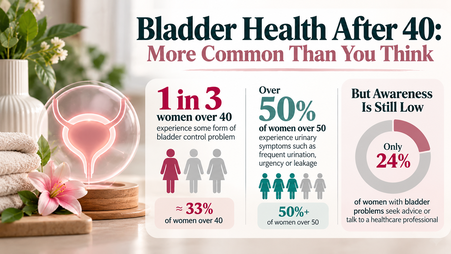
There is something frustrating about needing to find a bathroom before you can fully enjoy an outing. Maybe you have started waking up several times during the night, avoiding long journeys, or worrying about a little leakage when you laugh, sneeze, or exercise.
For many women, these changes become more noticeable after 40. Yet bladder health is rarely discussed as openly as hot flashes, weight gain, or other changes associated with perimenopause and menopause.
At EasyFitShape, we believe these everyday concerns deserve attention, not embarrassment.
This is why products such as FemiCore are attracting interest among women looking for additional urinary wellness support. Instead of focusing on a single ingredient, FemiCore combines botanical extracts with beneficial bacteria intended to support the urinary and vaginal microbiome.
But what exactly are the FemiCore ingredients, how do they work, and can they genuinely help women struggling with bladder discomfort after 40?
In this guide, we’ll examine the five main ingredient groups, explain the research behind them, discuss their limitations, and explore whether FemiCore deserves a place in a woman’s daily wellness routine.
Why Bladder Problems Become More Common After 40
Bladder changes can happen at any age, but hormonal shifts, childbirth history, pelvic floor changes, and aging can make urinary symptoms more noticeable in midlife.
Estrogen plays an important role in maintaining healthy vaginal and urinary tissues. As estrogen levels decline around menopause, these tissues may become thinner and more sensitive. Changes in the vaginal microbiome may also influence susceptibility to urinary infections.
Some women experience sudden urges to urinate, while others notice leakage during coughing, laughing, or physical activity.
The most common concerns include:
- Frequent urination: Needing bathroom breaks more often than usual.
- Urinary urgency: Experiencing a sudden, difficult-to-delay urge to urinate.
- Stress incontinence: Leaking urine when coughing, sneezing, or exercising.
- Nocturia: Waking repeatedly during the night to urinate.
- Recurring urinary infections: Experiencing repeated episodes of urinary tract infection.
These problems do not all have the same cause. A weak pelvic floor, overactive bladder, infection, medication, or menopause-related tissue changes may require different approaches.
The National Institute of Diabetes and Digestive and Kidney Diseases (NIDDK) identifies pelvic floor exercises, bladder training, lifestyle adjustments, and appropriate medical treatment as important options for improving bladder control.
That distinction matters when evaluating a supplement. Supporting urinary wellness is not necessarily the same as treating incontinence.
What Is FemiCore and How Does It Work?
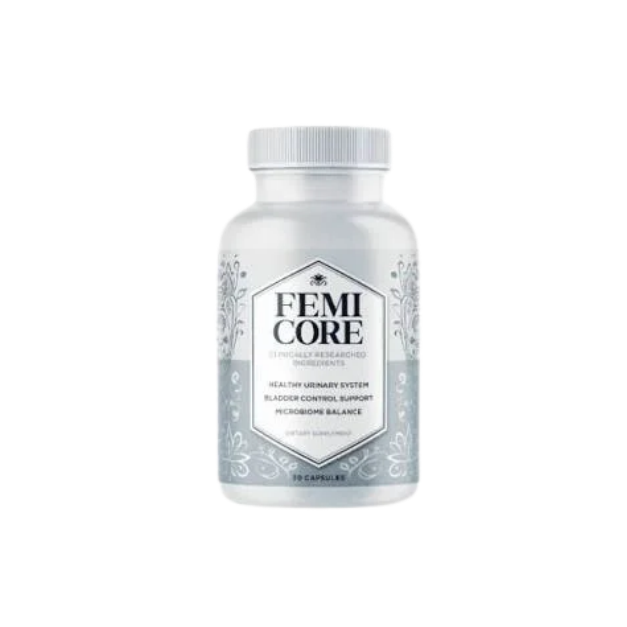
FemiCore is a dietary supplement marketed for women’s bladder comfort, urinary tract wellness, and feminine microbiome balance.
Its formulation brings together four botanical ingredients and five Lactobacillus probiotic species. The botanical blend includes cranberry extract, bearberry, Mimosa pudica, and berberine. The probiotic blend contains Lactobacillus crispatus, L. acidophilus, L. plantarum, L. gasseri, and L. casei.
The central idea is that maintaining a healthy microbial environment may support urinary and vaginal health, particularly as women experience hormonal changes.
FemiCore’s proposed benefits focus on three areas:
- Supporting a healthy urinary and vaginal microbiome.
- Helping maintain a urinary tract environment less favorable to unwanted bacterial attachment.
- Complementing everyday habits that support urinary comfort.
These mechanisms are scientifically interesting, particularly for women with recurrent urinary infections. However, evidence that the complete FemiCore formula reduces bladder leakage, strengthens pelvic floor muscles, or treats overactive bladder is not established by the available product information.
This makes it more appropriate to consider FemiCore as a potential wellness supplement rather than a proven treatment.
What’s Inside FemiCore? 5 Key Ingredient Groups Explained
Understanding the ingredients is more useful than simply reading a list of promised benefits.
Although FemiCore contains nine named botanical and probiotic ingredients, we can examine them in five practical groups based on their roles in urinary wellness.

1. Cranberry Extract: A Familiar Ingredient for Urinary Tract Protection
Cranberry has a long history of use in women’s urinary health. Unlike many traditional remedies, it also has a meaningful body of modern clinical research.
Cranberries contain compounds called proanthocyanidins, or PACs, which may help reduce the ability of certain bacteria, particularly some strains of E. coli, to attach to urinary tract surfaces.
This matters because bacterial attachment is one of the early steps involved in developing some urinary tract infections.
Research summarized in the American Urological Association’s 2025 guideline supports offering cranberry products as a preventive option for women experiencing recurrent uncomplicated UTIs.
Why cranberry matters for women over 40: Women experiencing recurrent infections during perimenopause or after menopause may be interested in preventive strategies that complement their medical care.
FemiCore’s listed cranberry extract is standardized to 30% proanthocyanidins, although the exact amount of cranberry per serving is not separately disclosed.
Cranberry does not treat an active UTI, and its infection-prevention research should not be interpreted as proof that it stops urgency or urine leakage.
2. Bearberry (Uva Ursi): Traditional Botanical Urinary Support
Bearberry, also known as Arctostaphylos uva-ursi, is a plant traditionally used for urinary complaints.
Its leaves contain arbutin, a compound that can be metabolized into substances with antimicrobial activity. This provides a biological explanation for its historical use.
Some research has examined bearberry preparations for uncomplicated urinary symptoms. However, the findings are not strong enough to establish bearberry as a reliable alternative to standard infection treatment.
For women over 40, bearberry may sound attractive because it is plant-derived. But natural ingredients can still have important safety limitations.
What to know: Bearberry is generally associated with short-term traditional use, not unrestricted daily consumption. Its safety depends on dose, extract composition, duration, and individual health factors.
Because FemiCore does not disclose the individual bearberry quantity in the listed blend, women should seek professional advice before using it regularly, especially if they have kidney problems or take medication.
3. Mimosa Pudica: A Traditional Herb With Emerging Interest
Mimosa pudica, sometimes called the sensitive plant, is recognizable for its leaves that fold when touched.
Different parts of this plant have been used in traditional herbal practices, and laboratory researchers have investigated some of its bioactive compounds.
However, there is limited high-quality human research demonstrating that Mimosa pudica improves bladder control, reduces urinary urgency, or prevents recurrent UTIs.
Its presence in FemiCore contributes to the botanical formulation, but its specific benefit for women’s urinary wellness remains uncertain.
For women considering FemiCore: Mimosa pudica should be viewed as an exploratory ingredient rather than a clinically proven solution for bladder leakage.
4. Berberine: A Plant Compound With Interesting Biological Properties
Berberine is a naturally occurring compound found in several plants. It has been studied for its effects on metabolic processes, inflammation-related pathways, and microorganisms.
Some laboratory findings suggest antimicrobial and other biological activity, which helps explain why supplement manufacturers are interested in including it in urinary wellness formulas.
However, laboratory activity does not automatically translate into improved bladder control in women.
There is currently insufficient direct clinical evidence that the berberine in FemiCore reduces urinary frequency, stops leakage, or improves bladder muscle coordination.
Berberine also deserves particular attention for safety. It can cause digestive side effects and interact with certain medications, including some medicines used to manage blood glucose.
Women taking regular prescriptions should discuss berberine-containing supplements with a qualified healthcare professional before use.
5. Five Lactobacillus Probiotics: Supporting the Feminine Microbiome
The probiotic blend is one of the more distinctive aspects of FemiCore.
A healthy vaginal microbiome is often dominated by Lactobacillus bacteria, which help maintain an acidic environment and limit the growth of some unwanted microorganisms.
Changes in estrogen levels around menopause can affect this microbial balance.
FemiCore lists five Lactobacillus species:
- L. crispatus: Associated with a protective vaginal microbial environment; studied for recurrent UTI prevention
- L. acidophilus: Helps support microbial balance; benefits depend on the specific strain
- L. plantarum: Investigated for its ability to interact with and support healthy microbial communities
- L. gasseri: Naturally found in some healthy vaginal microbiomes
- L. casei: Studied for immune and microbiome-related effects
Of these, L. crispatus has particularly interesting research relating to recurrent urinary infections. However, results from a specific probiotic strain delivered vaginally cannot automatically be applied to an oral supplement containing a different strain.
Clinical evidence for probiotics preventing recurrent UTIs remains mixed, and the benefits are highly dependent on the strain, dose, and delivery method.
The available FemiCore ingredient listing provides a total probiotic blend weight of 50 mg, but not a colony-forming unit (CFU) count. This makes it difficult to assess the quantity of live bacteria supplied or compare the formula directly with clinical studies.
Still, the microbiome-focused approach is relevant to an important aspect of women’s health that deserves greater attention.
Can FemiCore Help Women Over 40 Find Better Bladder Comfort?
One of the most appealing things about FemiCore is that it addresses an area of women’s health that often receives little attention: the relationship between microbial balance and urinary wellness.
For women experiencing recurring urinary discomfort, supporting a healthy vaginal microbiome may be worthwhile. Cranberry also offers a reasonably well-studied approach to reducing recurrent UTI risk in certain women.
However, bladder leakage is more complicated.
If a woman leaks urine when laughing or exercising because her pelvic floor muscles have weakened, a probiotic supplement cannot be expected to strengthen those muscles. Similarly, sudden urinary urgency may involve bladder nerve signaling, muscle activity, or other conditions that require specific treatment.
FemiCore may complement a broader urinary wellness routine, but there is not enough clinical evidence to promise relief from leakage, urgency, or nighttime urination.
For women seeking meaningful improvement, identifying the underlying cause remains the most important step.
Is FemiCore Safe for Daily Use?
Safety is especially important for women over 40 who may already be taking medications or managing other health concerns.
FemiCore contains ingredients commonly encountered in dietary supplements, but that does not guarantee that the complete combination is safe for everyone.
Potential concerns include digestive discomfort from probiotics, medication interactions involving berberine, and restrictions associated with bearberry use.
Women should be particularly cautious if they:
- Take medication for diabetes or other chronic conditions.
- Have kidney or liver problems.
- Are pregnant, breastfeeding, or planning pregnancy.
- Have a weakened immune system.
- Have experienced allergic reactions to botanical supplements.
The disclosed formula lists a 350 mg herbal blend and a 50 mg probiotic blend without providing individual botanical doses or a probiotic CFU count.
This limits the ability to independently assess the formula’s safety and likely effectiveness.
Before using FemiCore daily, it is sensible to review the current product label and discuss the ingredients with a healthcare professional.
Why Are Women Interested in FemiCore?
Women increasingly encounter urinary wellness products while researching natural approaches to menopause-related changes, bladder discomfort, and feminine microbiome health.
FemiCore fits this interest because it combines familiar ingredients, such as cranberry, with probiotics and botanical extracts in one supplement.
The convenience of a single product may appeal to women who prefer a straightforward wellness routine.
However, claims that FemiCore is widely trusted, exceptionally popular, or producing consistent results among thousands of women require independent customer and sales data. Product testimonials alone cannot establish clinical effectiveness.
When deciding whether to trust a supplement, look beyond enthusiastic reviews. Ingredient transparency, independent quality testing, realistic claims, and clear safety information are more useful indicators.
How to Support Bladder Health Naturally After 40
Alongside FemiCore for bladder control, adopting healthy lifestyle habits can further support bladder wellness and improve everyday comfort.
Pelvic floor exercises can help strengthen the muscles involved in preventing urine leakage. Bladder training may also help women gradually manage urgency and improve bathroom habits.
Other helpful steps include maintaining a healthy weight, managing constipation, drinking adequate fluids, and identifying whether caffeine or certain beverages worsen symptoms.
For women experiencing recurrent UTIs around menopause, a healthcare professional may recommend preventive treatments such as vaginal estrogen when appropriate. The 2025 American Urological Association guidance supports this approach for eligible peri- and postmenopausal women.
Persistent burning, fever, blood in the urine, or significant discomfort affecting the female urinary system should not be managed with supplements alone and requires proper medical evaluation.
Frequently Asked Questions About FemiCore Ingredients
There is insufficient product-specific clinical evidence to confirm that FemiCore stops bladder leakage. The best treatment depends on whether leakage is related to pelvic floor weakness, urgency, or another cause.
Its cranberry and probiotic ingredients are relevant to urinary and vaginal microbiome health. However, their presence does not establish that FemiCore treats menopause-related urinary symptoms.
There is no independently established timeframe for FemiCore to improve bladder control. Promotional timelines should not be treated as guaranteed results.
Cranberry has evidence supporting prevention of recurrent UTIs in some women. That evidence does not prove that the complete FemiCore formula prevents infections.
Age alone does not determine suitability. Medications, kidney health, other medical conditions, and the exact ingredient doses are important considerations.
Final Thoughts: Are FemiCore Ingredients Worth Considering?
Bladder health after 40 deserves more attention than it usually receives. Worrying about unexpected leakage, interrupted sleep, or frequent bathroom visits can affect everyday confidence and comfort.
What makes FemiCore interesting is its combination of cranberry, botanicals, and five Lactobacillus probiotics. These ingredients reflect growing interest in the connection between microbial balance and women’s urinary health.
Cranberry offers the clearest evidence for a specific urinary benefit: helping prevent recurrent UTIs in some women. Probiotics are promising but require more strain-specific research, while the other botanicals have important evidence and safety limitations.
Our EasyFitShape perspective: FemiCore may be worth discussing with a healthcare professional as an additional urinary wellness option, particularly for women interested in microbiome support. It should not replace proven treatments for bladder leakage, recurrent infections, or menopause-related urinary symptoms.
The goal is not simply to find another supplement. It is to understand what your body needs and choose an approach that helps you feel more comfortable, informed, and confident.
For more information about the product’s formulation, directions, and current label, visit the Femicore product information page.